


Plastic-Free Coffee Brewing – Why We Love Gourmia
Automated coffee makers are where it's at – push a button, get a pitcher to last you all day long. The issue is, most automated coffee makers are created with plastic components which come into direct connection with the hot water.
There are a lot of manual options out there – pourover systems such as the Chemex, a good old-fashion French press – when you are in a position to press brew and watch for your robot to brew your coffee? Very little tops that.
Product research nut that i'm, I went out looking for probably the most plastic-free coffee machine I could find – here's what I created.

Why Plastic and Hot Water Don't Mix
First, a science lesson. Let us get one thing clear, plastic and hot water do not get along. Despite the fact that most food-grade appliances are utilizing BPA-free plastic these days, that term gets taken with a touch of suspicion.
An alarming study recently says around 70% of “BPA-free” plastics still contain traces of BPA in them but still cause the same hormonal disruption that's been linked to reproductive defects and cancers.
Hot water exacerbates these qualities in plastics, resulting in the materials to leach chemicals in to the surrounding water. The unpleasant reality? That cup of hot coffee out of your brewmeister is sporting more than just caffeine.

The Trouble with Most Automatic Coffee Makers
Most coffee machines that involve buttons and filter baskets have several plastic components which come into direct connection with the hot water. And hey, let's face it – plastic is affordable to manufacture, won't shatter like glass during shipping, and is way less than stainless steel.
The cold water reservoir is typically plastic, which would not be such a problem if plastic didn't leach whatsoever in cold water (however it does). After that, the water typically gets heated by an element, undergone plastic tubing, and poured via a plastic filter basket right into a glass carafe.
Some commercial options, such as the Bunn coffee makers, offer replacement stainless baskets and stainless steel water tanks, however the coffee still gets poured over a plastic lid into the carafe.
And which was a dealbreaker for me personally.
Meet Gourmia
You guys, I can not let you know just how much this pursuit of a plastic-free coffee machine annoyed my hubby. Not just was he perfectly pleased with his kettle and French press, but he'd charged himself with finding us a solution and was without luck.
Everywhere we looked, there have been halfcocked solutions that led to the same issue, and we finished up shrugging our shoulders and saying maybe this was one struggle with plastic we simply couldn't win.
Until an unassuming coffee maker on Amazon caught our eye.
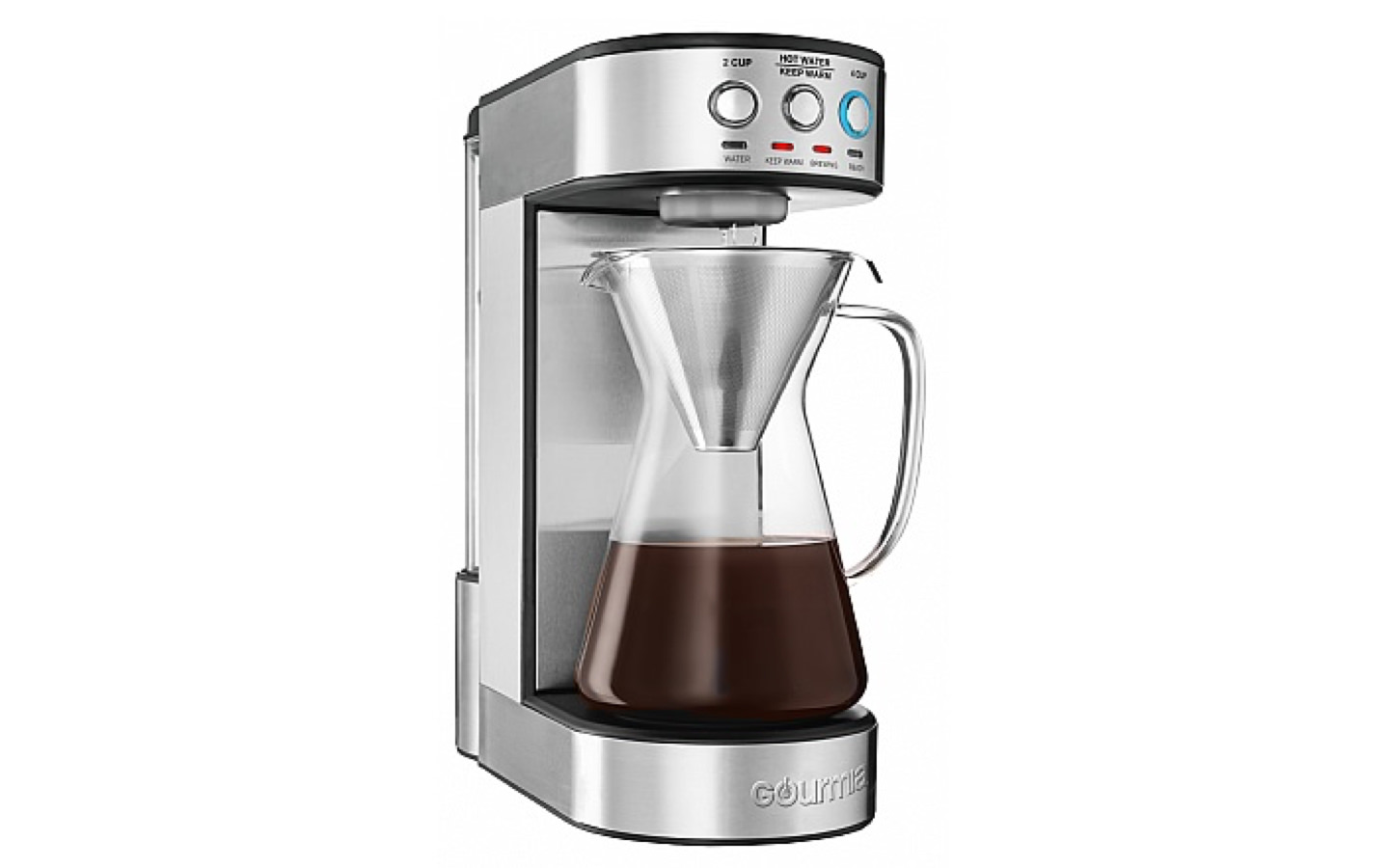
The Gourmia GCM4900 Coffee machine is really a 5-minute coffee maker, and save for any small piece of plastic tubing within the machine, is one of the few coffee makers which has almost no plastic coming into contact with warm water.

The Almost Plastic-Free Coffee Machine
I'll be honest – the reasonable price helped me skeptical of how good it actually was. I had looked at a lot of high-end models, searching for a plastic-free coffee maker in the higher end machine category, and had absolutely no luck.
But this thing is NOT too best to be true.
Equipped with a glass water reservoir, stainless steel grounds basket (no paper filter required), and a 100% borosilicate glass carafe reminiscent of the Chemex styling, it is the real deal.
There's some plastic contact, which I am not crazy about, but all in all, it's definitely the best solution out there.
While not programmable, this coffee machine earns major points for being this type of quick brew and for using a coffee filter basket. This will make the device zero waste if you buy your beans in bulk.
CHECK IT OUT
Lazy Caffeine (For People Too Tired to Pour)
It's ridiculous, it's lazy, it's way, way sad that I need a robot to create my coffee for me personally.
But seriously, you need to think about: How, of household appliances, have our coffee machines not become plastic-free yet?


