


Advantages of PWA for B2B Ecommerce
Progressive web apps (PWAs) are websites that generate a mobile app experience without the need to install an app.
They use modern web browser capabilities, application programming interfaces (APIs) and AMPs (Accelerated Mobile Pages) to provide a quick and seamless experience across all devices. PWAs can also be saved around the home screen of mobile devices without visiting an app store.
Ecommerce companies that have created mobile-first PWAs have seen considerably faster page load times, improved engagement and conversion rates. For example, the Forbes mobile browser experience took an average of three to 12 seconds to load. The Forbes PWA takes less than one second and it has delivered a 43% rise in sessions and a 100% increase in engagement.
PWAs are proving popular in the industry to consumer (B2C) environment, and can they work as effectively for business to business (B2B) companies?
Are PWAs the future?
Gartner predicts that PWAs will give you the bridge between web experiences and mobile app functionality. Some organizations have previously decided that PWAs really are a better solution than maintaining an internet site and one or more mobile apps.
With over fifty percent of online traffic originating from cellular devices, delivering the perfect experience is becoming an urgent priority. For b2b (B2B) companies that don't actually have a mobile app to enhance their ecommerce website, PWAs could be the next logical step.
Features of PWAs
There are three distinctive features that make PWAs attractive.
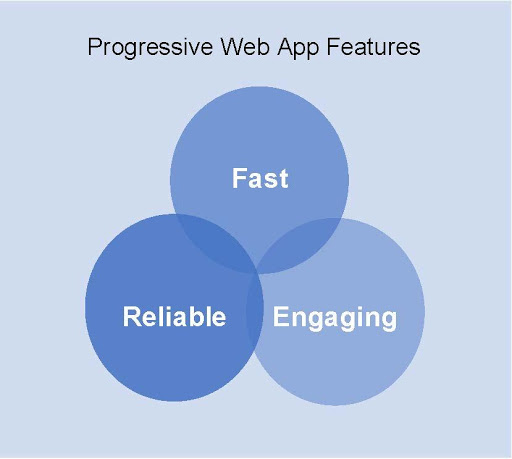
Reliability – When launched from a user's desltop PWAs load instantly, regardless of the network state. By caching key resources and helped by service workers (background scripts to aid offline activity) PWAs aren't determined by network availability and can deliver fast and reliable experiences for users.
Speed – Google says that over 1 / 2 of users (53%) will abandon a website whether it takes longer than three seconds to load. PWAs load quickly and can meet users' expectations for smooth and fast responses.
User engagement – PWAs offer an immersive full screen experience and may deliver push notifications. Because of their web app manifest, how they launch and appear can be defined, right down to their home screen icon, launch page, and screen orientation.
Benefits of PWAs for B2B buyers
PWAs use cached data to update content and send push notifications without the need to collect email addresses or ask permission to use them. Google states that six out of 10 users can give permission for PWAs to send notifications.
They are designed for mobile screens, so they respond quickly to swipes and taps instead of substitute 'clicks'. Visually they're impressive too. With smooth animations and easy page scrolling they can deliver really immersive experiences.
Because PWAs are browser based, they work on all devices. Users can just go to the page. Answering a simple prompt will place them on their home screen where they will seem like a native app. Updates are easily implemented online so users don't need to take any action to remain current.
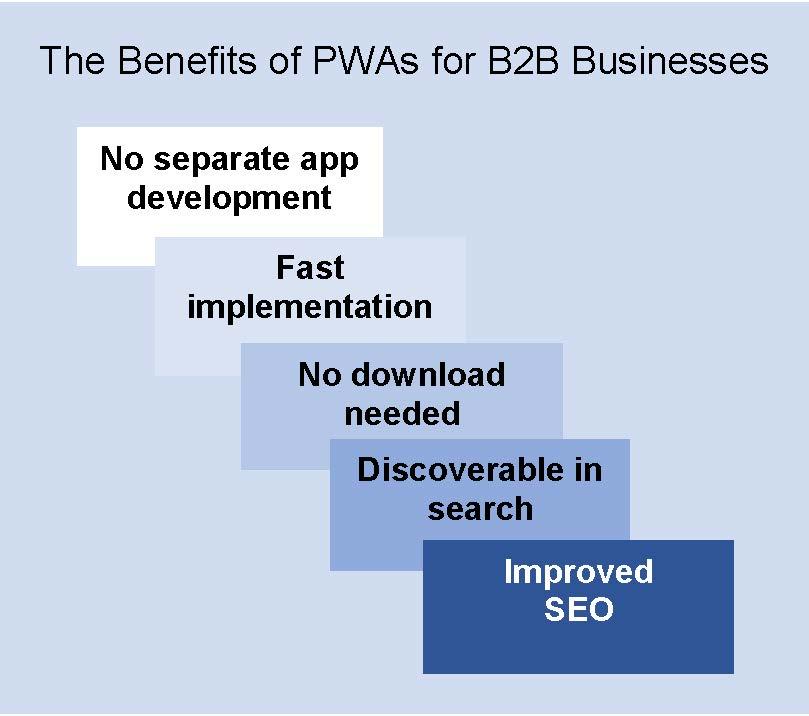
Benefits of PWAs for B2B businesses
PWAs needn't be built as a separate mobile app and do not have to be hosted in app stores. This means that they can be developed and implemented quickly and cost effectively.
Unlike mobile apps, internet based PWAs can be found by the search engines, links to their content could be shared, plus they can be ranked by Google and Bing.
Fast page loading times, reduced bounce rates, low data use and interesting experiences that cause longer dwell times all add to the search engine performance of the site.
PWA technology
Well-designed PWAs can improve overall performance searching rankings. Security, a responsive design and fast page loading time all improve user experiences and contribute to the technical search engine optimization (SEO) for the website.
New features and functionality can be deployed immediately and, because buyers always have the latest version, customer care inquiries can be reduced.
Because PWAs are built using the latest web protocols, they also offer excellent security when compared with many mobile apps.
PWAs can get rid of the requirement for development teams to create and build separate iOS, Android and even Windows 10 versions of the native applications, which can be costly.
Building PWAs
To build and keep a PWA your site's static content needs to be separate from the dynamic content. The app shell architecture has got the core aspects of the design required to allow PWAs to run with no network connection.
Application programming interfaces (APIs) may be used to lessen the quantity of data sent to the user's device. This places the focus on the customer's experience, which is separate from the background business information.
For example, a product listing might load the first ten products only, with increased products loading as the user scrolls down, similarly to Facebook. Less data needs to be delivered to the server at anyone time, improving the speed of response.
This separation between the interface and back-office systems means that user experiences could be revised and tested more quickly with less risk.
Is a PWA the right choice for the business?
The cms for the current ecommerce platform might not offer PWA functionality. If this is the situation, a review of your strategy, plans, and preferred platform may be needed.
If you've got a relatively few stock keeping units (SKUs) as well as your buyers know precisely what they want with not many customization requirements, then moving to a PWA might not be an urgent priority.
Developing a PWA solution
If you can realize benefits from fast-tracking your web offer, your PWA starting point should be your buyers' requirements.
You come with an opportunity to combine the very best of the web and app worlds to deliver the features and functions your buyers are looking for and to gain a competitive advantage.
It's also a chance to review your ecommerce strategy, placing your visitors right at its core.


