
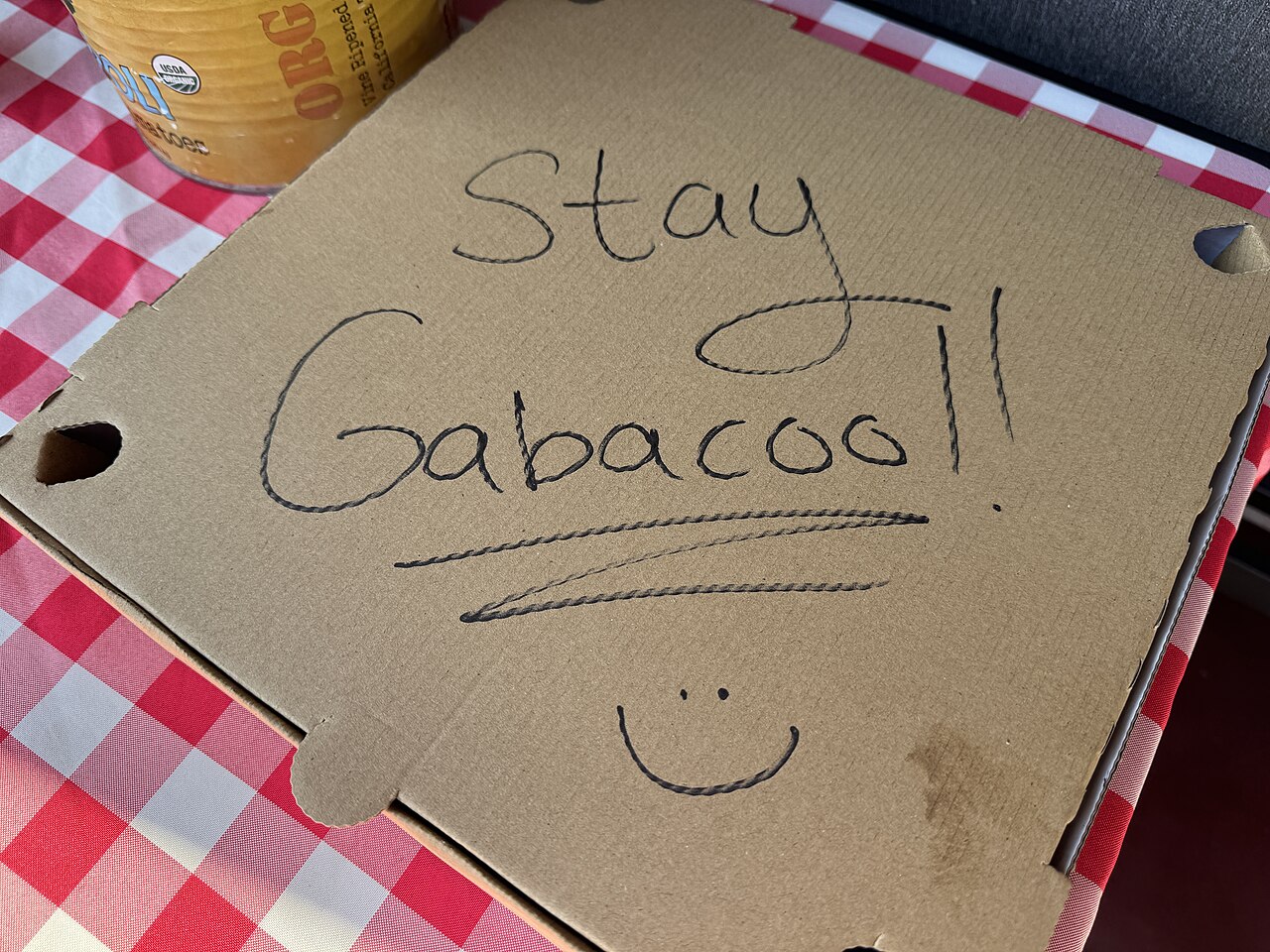
The greasy-box question has a clearer answer than most people think, based on EPA guidance and industry studies. Here is what to do with the box, the liner and the leftovers.
In brief
- The EPA says empty pizza boxes are recyclable even with grease, as long as food scraps are removed and the box is flattened.
- An industry study found typical boxes carry 1 to 2 percent grease by weight, about one-tenth the level acceptable for cardboard recycling.
- 82 percent of Americans now have access to a recycling program that accepts pizza boxes, up from 73 percent in 2020.
- Rules still vary locally, so check your county or city program before assuming your greasy box is accepted.
- Heavily soaked boxes and cheesy leftovers belong in compost where programs exist; frozen pizza boxes and waxed liners belong in the trash.
Few household recycling questions produce as much hesitation at the bin as the greasy pizza box. The short version: an empty pizza box is usually recyclable, grease stains and all. The longer version depends on what your local program accepts, how much cheese is stuck to the lid and whether your city also runs a compost stream. Here are answers to the questions people actually search for, with the evidence to back them up.
Can You Recycle a Pizza Box With Grease on It?
Yes. The EPA’s recycling guidance says pizza boxes can be recycled even if they have grease in them, as long as you remove any food scraps and flatten the box before it goes in the bin. The paper industry has come around to the same position. Member companies of the American Forest and Paper Association that together represent 94 percent of the country’s annual old corrugated container consumption now accept pizza boxes, and the association reports that 82 percent of Americans have access to a community program that takes them, up from 73 percent in 2020.
That said, acceptance is not universal, and some programs still have unclear rules. Your local guidelines always outrank anything you read online.
Why Did Grease Get Such a Bad Reputation?
The caution was not invented out of thin air. Grease and cheese are food residues, and food residue really can cause problems in paper recycling, which is why older guidance often told people to trash the box entirely. Compounding the confusion, a study cited by the Recycling Partnership found that roughly 73 percent of community recycling programs had no clear acceptance guidelines for pizza boxes. When the rulebook is silent, people assume the worst.
Habit has lagged behind the science. In a survey of 1,400 people conducted as part of that work, three out of four said they recycle their pizza boxes. Among residents who said they do not, nearly half named grease as the reason. The evidence now says that deterrent is largely misplaced.
What Did the Grease Study Actually Find?
In 2020, pizza box manufacturers and paper mills, working with the Recycling Partnership and the packaging company then known as WestRock, ran scientific tests to establish how much grease a box can carry and still be recycled. The results were clear. A typical used pizza box contains 1 to 2 percent grease by weight, which is about one-tenth of the level considered acceptable for corrugated cardboard recycling.
The researchers went further, adding greasy pizza boxes to mixed recycling loads at a rate of 8 percent, with grease contamination ranging from 3 to 40 percent. The recycled material that came out was still viable for packaging use and well within the tensile strength that packaging requires. Cheese turned out to be a non-issue as well: remnants tend to solidify and are screened out during the pulping stage of recycling.
Why Does Food Residue Cause Problems at Recycling Plants?
If grease is so harmless, why does anyone worry? The answer is that grease in small, typical amounts behaves differently from pools of oil and from other food waste. Food and liquids are among the most common recycling contaminants because they cause mold, and mold eats away at the fibers in paper and cardboard until those fibers cannot be turned into new paper. Mold can also spread to nearby items such as bottles and cans, lowering their value, and it makes material unsafe for the workers who handle it.
Sorting equipment compounds the issue. The machinery at a recycling facility is built to separate common recyclables, and it cannot tell a cardboard pizza box covered in grease and cheese from a clean one. When contamination runs high enough, an entire load can be redirected to the landfill, clean recyclables included. The EPA has estimated that about one in four items placed in recycling bins is contaminated, which is a lot of well-intentioned sorting going to waste.
How Do You Find Out What Your Local Program Accepts?
Contact your county or municipality, which the EPA recommends as the way to learn your local recycling options. Many cities and haulers publish accepted-material lists on their websites or mail them with service bills, and lookup tools such as Earth911 can point you to recycling options near you. Acceptance of pizza boxes has expanded quickly, but the only list that matters is the one for your address.
If your program still does not take pizza boxes, do not sneak them in anyway. Materials a program has not accepted cause trouble at the sorting plant, and forcing items into the bin raises contamination rates for your whole neighborhood. Instead, contact your local recycling coordinator and ask why. Citizen requests carry real weight at local sanitation departments, and industry research and outreach materials exist specifically to help programs update their guidelines.
What Is the Tear-Off Trick, and Do You Still Need It?
The tear-off trick means splitting the box and recycling only the cleaner half, usually the top lid, while composting or trashing the greasy bottom. Some waste companies have suggested it as a compromise for customers whose programs balk at food residue.
Given the current science, it is not necessary for a typical lightly greased box, and it is not required where programs accept boxes outright. It remains a genuinely useful move in two situations: when your local program bans pizza boxes but takes clean cardboard, and when the bottom of a box is heavily soaked with oil. Splitting the box costs ten seconds and keeps the maximum amount of fiber in the recycling stream.
What Should You Remove Before the Box Goes in the Bin?
Three things, none of which are grease:
- Leftover pizza, including crusts, cheese and toppings stuck to the lid. The box needs to be completely empty.
- The paper or waxed liner, if the box came with one. It goes in the trash; the box itself recycles as normal cardboard.
- Any plastic pieces, such as the small table that props the lid up in some boxes.
After that, flatten the box so it does not jam sorting equipment or trap other items, and put it in the bin loose. Recyclables should never go in tied bags, since bagged material is generally treated as trash at the sorting facility.
Try this: Where curbside composting is available, the greasy bottom of the box can be separated for compost while the cleaner lid recycles. That split keeps the most material out of the landfill.
Can Greasy Boxes Go in the Compost Instead?
Often, yes. Some cities, including Oakland, California, direct all food-soiled paper and cardboard to the compost cart, where it can break down into soil amendments, and Portland, Oregon, tells residents to put cheesy or saucy pizza boxes in the residential compost cart or the trash. The researchers behind the grease study also suggest composting for boxes that are completely soaked with oil.
Curbside compost rules vary a lot from place to place, so check what your hauler accepts before adding cardboard. If you compost at home, a greasy box needs different handling than a clean one, and our guide to home composting basics covers how to build a pile that actually breaks down.
What About Frozen Pizza Boxes?
Frozen pizza boxes belong in the trash. They look like ordinary cardboard, but like disposable coffee cups, paper plates and many takeout containers, they carry a thin coating of plastic rather than wax. That coating, plus food contamination, makes them unrecyclable at standard paper mills, which is why the clean-looking box in your freezer aisle is a different animal from the delivery box on your counter.
Which Other Takeout Containers Trip People Up?
Pizza boxes get the headlines, but the takeout drawer is full of lookalikes with different rules:
| Container | What usually applies |
|---|---|
| Paper or cardboard takeout containers | Recyclable only if scraped or rinsed until “spatula-clean”; food-contaminated ones are not |
| Disposable coffee cups | The cup is trash; the plastic lid and cardboard sleeve can be recycled |
| Plastic bags and film | Never loose in the bin; they tangle machinery, so use store drop-off programs |
| Frozen food boxes | Trash, because of the thin plastic coating |
| Single-use plastic utensils | Not recyclable; reuse them or switch to durable versions |
One more kitchen note: grease and cooking oil behave differently from a greasy box. Small amounts can be scraped into a paper container and composted, while larger quantities should go to a household hazardous waste facility rather than into any curbside cart.
Does One Box Really Make a Difference?
Individually, no; collectively, yes. Americans use roughly 3 billion pizza boxes a year, and improved recycling processes could capture around 600,000 tons of cardboard annually from them, material that becomes new shipping boxes, paper towels and other paper products. Recycling already does heavy lifting: paper is the largest single material in municipal trash at 23 percent of generation, and Americans recycled about 68 percent of the paper they used in 2018. Recycling one ton of office paper saves the energy equivalent of burning 322 gallons of gasoline.
The trade-off to remember is that recycling is not the top rung of the waste hierarchy. The EPA ranks source reduction and reuse as the most environmentally preferred strategies, which in practice means the best pizza box is the one that never gets created: cooking at home, or choosing places that use less packaging. When carryout is on the menu, getting the box to the right destination is worth the half minute it takes. Our guide to recycling right covers the other mistakes that send good materials to the landfill, and if food waste is your bigger concern, start with wasting less food at home.
Reader questions
Can I recycle a pizza box with grease on it?
Yes, under EPA guidance, as long as the box is empty of food and flattened. Grease in typical amounts does not affect the cardboard recycling process.
What should I do with the waxed paper liner?
Remove it and put it in the trash. The box itself recycles as ordinary cardboard.
Where does a heavily soaked box go?
Food-soiled cardboard belongs in curbside composting where programs accept it. Otherwise the trash is the fallback.
Are frozen pizza boxes recyclable too?
No. They carry a thin plastic coating, so they belong in the trash even when they look clean.
This article is general information, not financial, legal or tax advice. Programs, incentives and rules change, so check current details with official sources and qualified professionals before you decide.