
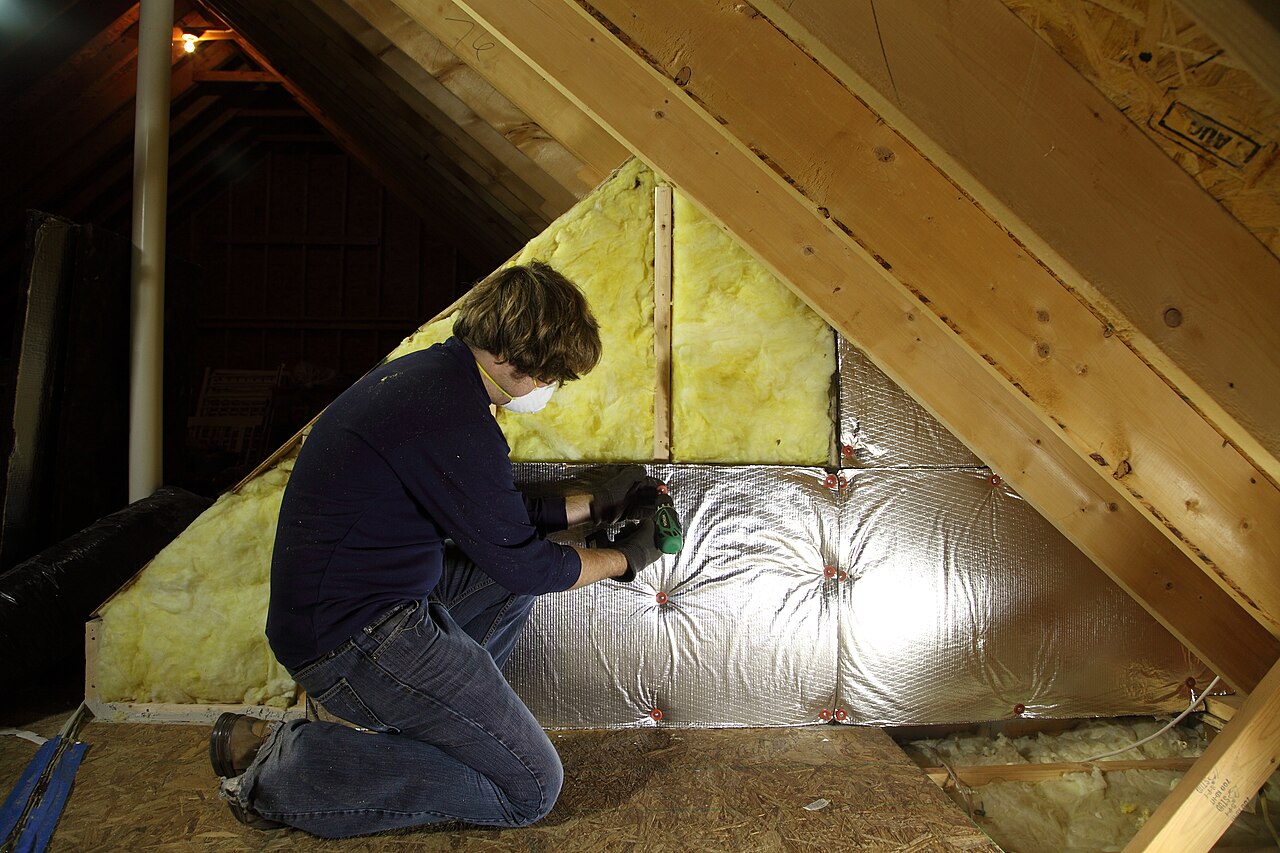
A clear breakdown of attic insulation prices by material, attic size and whether you DIY or hire out, plus the savings, tax credits and quote-shopping tips that affect what you actually pay.
In brief
- Professional attic insulation generally costs $1 to $7 per square foot installed, which works out to $1,500 to $6,000 for most homes.
- EPA modeling estimates that sealing leaks and topping up attic insulation trims about 15% off heating and cooling bills, or 11% off total energy costs.
- Recommended attic levels run R-30 to R-38 in the warmest zones and R-30 to R-60 across most of the country, and the R-value you install is the biggest single cost driver.
- Bulk insulation qualifies for a federal tax credit on products purchased and installed between January 1, 2023 and December 31, 2025, subject to a $1,200 annual envelope cap.
- Quotes are only comparable when they match on material, scope of work, surface insulated and finished R-value, so ask contractors to itemize all four.
Attic insulation is one of the few home upgrades that cuts bills, improves comfort and carries a federal tax credit at the same time. Pricing it from search results is hard, though, because quotes run from under $1,000 to well over $10,000, and both extremes can be legitimate. The range makes sense once you know which job is being quoted: what material, how deep, and whether air sealing and removal are included.
Why the Attic Comes First
Heat rises, and the attic sits directly in its path. ENERGY STAR counts a well-sealed, well-insulated attic among the most important steps in its Home Upgrade program, because low insulation levels and air leaks force heating and cooling systems to work harder and leave rooms uncomfortable in summer and winter alike. One industry estimate attributes as much as a quarter of a home’s winter heat loss, along with the heat that seeps in during summer, to the attic alone.
Checking your levels takes minutes. If the insulation sits at or below the top of the floor joists, you probably need more. Measure the depth with a ruler in several spots and note the numbers, so you know how much material it takes to reach the level recommended for your climate.
Typical Costs by Material and Attic Size
A professional installation generally runs between $1 and $7 per square foot, which comes to $1,500 to $6,000 on a typical home. The cheapest route is loose-fill fiberglass or cellulose blown across an open attic floor, at roughly $1 to $4 per square foot installed. Other national estimates land in a similar band: one puts blown-in installation at $1,500 to $3,700 with an average near $2,900, and another at $930 to $2,085 with an average near $1,507.
Higher figures, up to $7.77 per square foot in one May 2026 estimating database, are not wrong either. That estimate covers a professional job blown to an R-45 level with rafter vent baffles, sealing tape, setup and cleanup included. More depth and more scope mean more money.
Applying that $1 to $4 installed range to common attic sizes:
| Attic size | Low estimate ($1 per sq ft) | High estimate ($4 per sq ft) |
|---|---|---|
| 500 sq ft | $500 | $2,000 |
| 1,000 sq ft | $1,000 | $4,000 |
| 1,500 sq ft | $1,500 | $6,000 |
| 2,000 sq ft | $2,000 | $8,000 |
Material matters, too. Batts run slightly higher since installing them takes longer. Spray foam sits far above the rest on price, which explains the five-figure quotes that turn up in search results.
DIY Blow-In vs. Hiring a Contractor
The biggest saving in a do-it-yourself blow-in job is labor, and labor is not small. Rates typically run $40 to $70 per hour, and the work takes longer in existing homes than in new construction. Equipment can be rented, and ENERGY STAR publishes a DIY guide to sealing and insulating. The trade-offs are time, a helper to feed the machine, and the risk of uneven coverage, which is exactly what you pay a crew to get right.
A contractor quote should include more than insulation. Professional jobs typically cover planning, setup, protection of the space, rafter vent baffles at soffit vents, job supplies such as sealing tape, and cleanup. Air sealing is worth adding if it is offered: the EPA’s savings estimates assume leaks are cut by about a quarter and insulation is brought up to 2012 code levels, with the two projects done together.
What Changes the Price
Four variables explain most of the spread between quotes:
- The material. Loose-fill fiberglass and cellulose sit at the bottom of the price range; spray foam sits at the top.
- The scope of work. Some quotes cover only a fresh layer blown over existing insulation, while others bundle removal and disposal, cleanup, air sealing, baffles and the new material itself. Removal adds a separate line item, usually with a dump fee.
- The surface involved. The standard job insulates the attic floor. Applying insulation to the underside of the roof deck, which brings the attic inside the home’s conditioned space, costs far more because it takes much more material.
- The R-value installed. This is the biggest factor of the four. A thin R-13 layer over 1,000 square feet runs roughly $368 to $520, but the levels recommended for most of the country take two to five times as much material.
Access matters as well. Pull-down stairs beat a ladder-accessed hatch, and homes with cathedral ceilings and no attic need an energy auditor or insulation contractor to assess what can be added. Expect smaller attics to cost more per square foot, since a crew’s setup and cleanup time is spread over fewer square feet.
How Much Insulation You Need: R-Values by Climate
Insulation is rated by R-value, a measure of how well it resists heat passing through it. Higher numbers mean better thermal performance, and different materials get there at different rates:
- Fiberglass batts deliver roughly R-2.9 to R-3.8 per inch
- Blown-in fiberglass manages R-2.2 to R-2.7 per inch
- Blown-in cellulose reaches R-3.2 to R-3.8 per inch
- Open-cell spray foam performs at R-3.5 to R-3.9 per inch
- Closed-cell spray foam tops the list at R-6.0 to R-7.0 per inch
Those rates explain why material choice moves the bill. Hitting R-49, a common target in colder climates, takes roughly 14 to 16 inches of blown cellulose, while closed-cell spray foam gets there with about 7 to 8 inches. In the warmest zones, which include Florida, Texas, Arizona and Southern California, recommendations run R-30 to R-38; across most of the country they fall between R-30 and R-60. Local building codes set minimums for new work, so check yours before settling on a target.
How Much You Can Save, and How Fast It Pays Back
EPA’s energy modeling of a typical existing US home, one built with construction common to houses from 1970 to 1989, puts the payoff from sealing leaks and upgrading insulation across the attic, crawl space floors and basement rim joists at 15% off heating and cooling spending, or about 11% off the total energy bill.
Payback depends on what you spend and what your bills look like. A $1,500 to $2,900 project recovers its cost faster in a climate with long, cold winters or hot summers and high energy bills than in a mild one. Households that heat with oil have an added incentive, since the Energy Information Administration lists proper attic insulation among the steps that reduce heating oil use. There is also a return that never shows up on a bill: fewer drafts and rooms that hold their temperature.
Tax Credits, Rebates and Comparing Quotes
Bulk insulation qualifies for the federal Energy Efficient Home Improvement Credit when purchased and installed between January 1, 2023 and December 31, 2025. Eligible products include batts, rolls, blow-in fibers, rigid boards, expanding spray and pour-in-place insulation. The credit carries an annual aggregate cap of $3,200 across all efficiency improvements, with $1,200 of that available for envelope upgrades such as insulation combined with windows, doors and central air conditioners. It applies to a principal residence in the United States, so renters and second homes do not qualify.
Try this: Ask every contractor you interview about local incentives. Utility and state rebate programs vary widely, and installers who work in your area often know which ones are currently active.
Getting comparable quotes takes some discipline. A quote only matches another when it covers the same material, the same scope of work, the same surface and the same finished R-value, so ask each contractor to itemize those four things. Once they do, the numbers finally line up.
Insulation is one piece of a lower energy bill, not the whole picture. For more ways to trim costs when the weather turns cold, see our seven ways to cut your heating bills, and if a bigger upgrade is on your mind, our guide to heat pumps explains how they work and who they suit.
Reader questions
How do I know if my attic needs more insulation?
If the insulation in your attic sits at or below the top of the floor joists, ENERGY STAR advises adding more. Measure the depth with a ruler in a few spots and compare it to the level recommended for your climate zone.
Is blown-in insulation cheaper than batts?
Loose-fill fiberglass and cellulose are usually the cheapest options, at roughly $1 to $4 per square foot installed. Batts cost a bit more because they take longer to install.
How long does attic insulation take to pay for itself?
Payback depends on your climate, fuel prices and how much insulation you start with. EPA’s modeling puts typical savings at 15% of heating and cooling spending, so homes with large bills recover a typical project cost faster than homes in mild climates.
Can I insulate my attic myself?
Yes. A blowing machine can be rented and ENERGY STAR publishes a do-it-yourself guide, so the main saving is the $40 to $70 per hour labor cost. The trade-offs are time, a helper to feed the machine, and getting even coverage to the right depth.
This article is general information, not financial, legal or tax advice. Programs, incentives and rules change, so check current details with official sources and qualified professionals before you decide.