
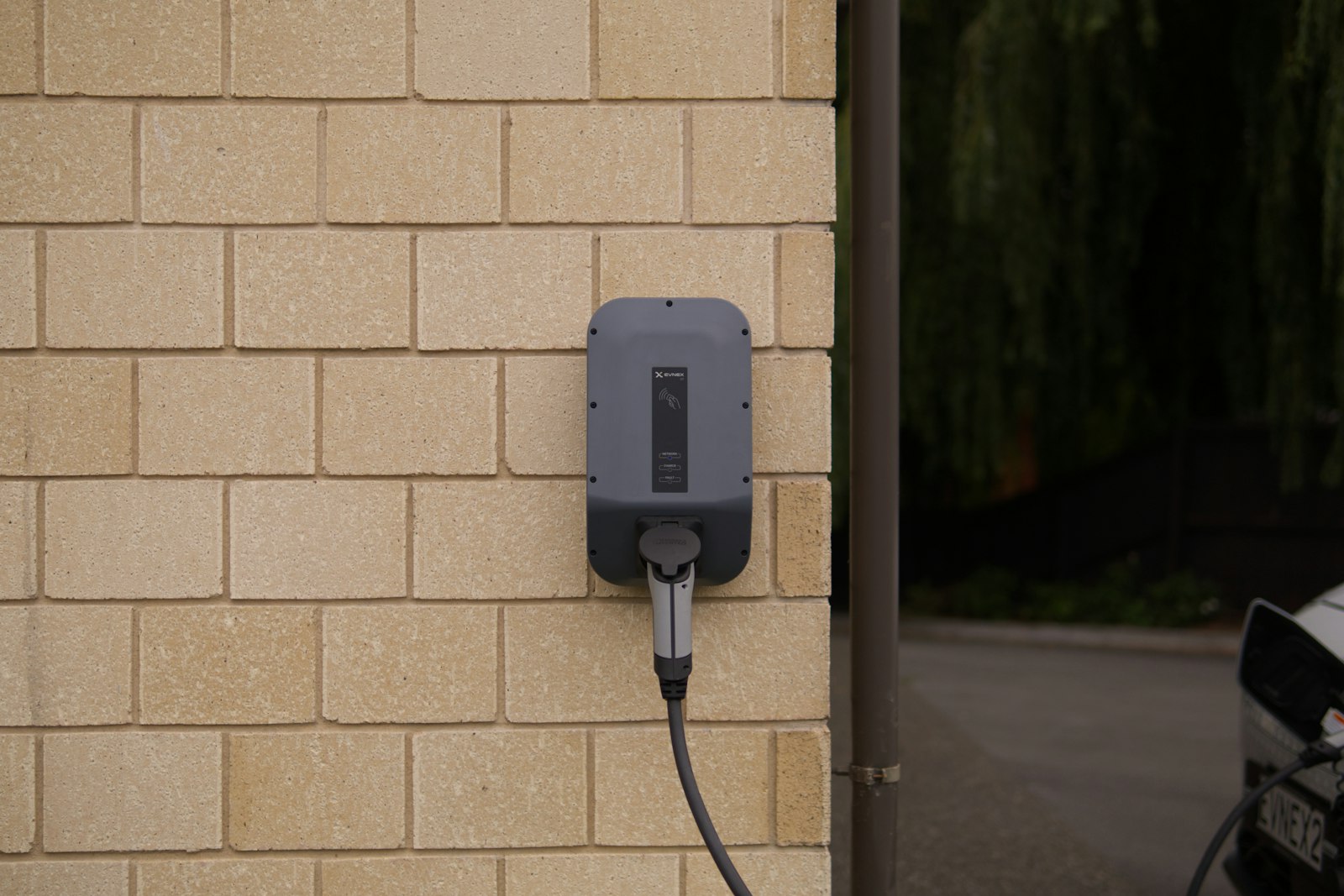
Most EV charging happens at home, overnight. Whether a standard outlet is enough depends on how far you drive.
In brief
- Level 1 charging uses a standard 120-volt outlet and adds roughly 5 miles of range per hour, according to DOE’s Alternative Fuels Data Center.
- Level 2 charging uses 240 volts and adds roughly 25 miles of range per hour, though real rates vary by vehicle and equipment.
- Level 1 needs an outlet on a dedicated branch circuit near where you park; Level 2 may need new circuits added by a qualified electrician.
- Permits may be required, and installations must meet local and state codes.
- Choose safety-certified equipment, such as ENERGY STAR chargers, and outdoor-rated equipment for outdoor use.
For most electric vehicle owners, the main “gas station” is a garage or driveway. Charging at home overnight is usually the cheapest and most convenient option. The big decision is whether a standard household outlet will do, or whether a faster Level 2 charger is worth installing.
Level 1 and Level 2 at a glance
| Level 1 | Level 2 | |
|---|---|---|
| Power source | Standard 120-volt outlet | 240-volt circuit |
| Range added per hour (approximate) | About 5 miles | About 25 miles |
| Equipment | The cordset that usually comes with the car | A wall-mounted or plug-in charging unit |
| Installation | An outlet on a dedicated circuit near your parking spot | May need new circuits and a permit |
The range figures come from DOE’s Alternative Fuels Data Center and are approximate. Actual rates depend on how much power your car can accept and how efficiently it uses energy, so check your vehicle’s specifications.
Level 1: plug in and go
Level 1 uses the charging cord supplied with most EVs. DOE notes that many owners need no extra spending or installation, as long as there’s a power outlet on a dedicated branch circuit near where they park.
At roughly 5 miles of range per hour, a 10-hour overnight charge adds around 50 miles, which DOE says can cover many drivers’ daily range. It’s slower for large batteries or long commutes, but it’s simple and cheap.
Level 2: faster, with some installation
Level 2 equipment runs on 240 volts, like an electric dryer or range. It suits longer commutes, households with two EVs and vehicles with large batteries.
DOE points out that some homes don’t have enough electrical capacity for Level 2 charging, and that a qualified electrician can add circuits. Before you buy:
- Check your car’s guidance. DOE recommends consulting the vehicle manufacturer to identify the equipment and specifications you need.
- Have an electrician assess your panel and the route from the panel to your parking spot.
- Ask about permits. DOE notes that permits may be required by local building and permitting authorities, and installations must comply with local and state codes. Most charging equipment requirements fall under Article 625 of the National Electrical Code.
- Choose safety-certified equipment. DOE highlights ENERGY STAR-certified chargers, which are tested by a nationally recognized testing laboratory.
Be careful: EV charging draws a large, steady load for hours. Don’t improvise with damaged outlets, overloaded circuits or household extension cords. If an outlet or plug gets hot, stop charging and have an electrician check it.
Charging outdoors
If you park outside, use outdoor-rated equipment. DOE says outdoor charging is safe, even in the rain, with equipment designed for it. Plan where the cable will run so it isn’t a trip hazard and won’t be driven over.
Keeping charging costs down
Your cost per mile depends on your electricity rate. Ask your utility whether it offers time-of-use or EV rates that make overnight charging cheaper, and use your car’s or charger’s scheduling feature to start charging during off-peak hours.
Charging and the rest of your home
If you’re planning other electric upgrades, such as a heat pump, talk to your electrician about them together, because they all draw on the same electrical service. And however you power your car, the driving habits in our guide to using less fuel still stretch your range.
Reader questions
Is Level 1 charging enough?
For many drivers, yes. DOE notes that overnight Level 1 charging can cover many drivers’ daily range. Level 2 helps with longer commutes or large batteries that can’t be fully charged overnight on Level 1.
Can I charge with an ordinary extension cord?
Follow your vehicle and charging equipment manufacturers’ instructions. Many advise against using ordinary extension cords, and a properly installed outlet or charger is the safer choice.
Is it safe to charge outdoors in the rain?
DOE says outdoor charging is safe, even in the rain, when you use outdoor-rated equipment that’s installed correctly.
Do I need a permit for a Level 2 charger?
Often. DOE notes that permits may be required by local building and permitting authorities. A qualified electrician can tell you what’s needed in your area.
This article is general information, not financial, legal or tax advice. Programs, incentives and rules change, so check current details with official sources and qualified professionals before you decide.